The Swedish carmaker has initiated a training programme for Hexagon Robotics' AEON humanoid robots at its Ghent facility in Belgium, marking the first time Volvo has brought such machines into one of its manufacturing plants. The company expects to scale up the pilot during the first half of 2027, with the robots entering regular production workflows from mid-2027 onwards.
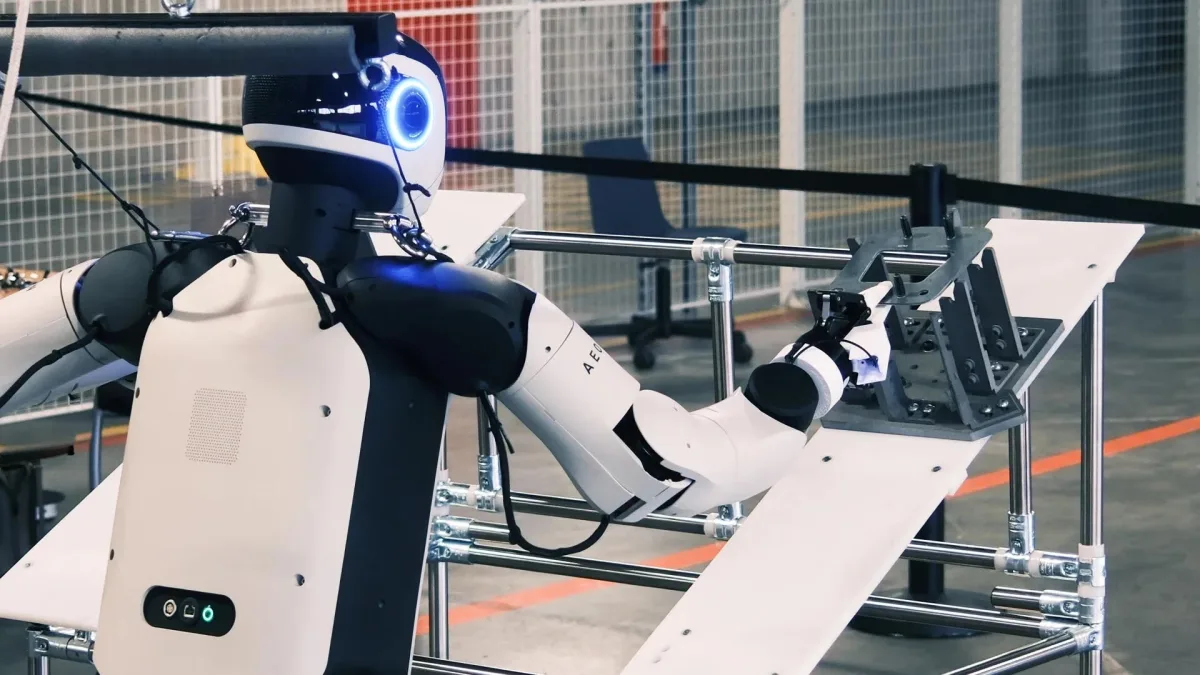
AEON is a 1.65-metre humanoid equipped with wheels instead of legs, weighing 60kg and capable of lifting up to 10kg. The machine relies on an array of cameras and sensors to perform its assigned tasks. Currently, Volvo's workforce is teaching the robots through demonstration techniques, focusing on the precise placement of components into two separate fixtures. As the programme advances, AEON units will expand their capabilities to handle additional parts, navigate throughout the factory floor and integrate with Volvo's existing automated systems. A fresh batch of robots will join the trial when the larger pilot phase begins in the first half of 2027.
AEON's humanoid design means it can fit into our production as it is today, alongside our teams and existing automation
Magnus Nilsson, chief manufacturing officer at Volvo Cars
According to Volvo, the deployment strategy centres on assigning the robots to perform some of the most physically taxing operations within the factory, thereby reducing strain on human workers.
Volvo is not alone in exploring humanoid robotics on the factory floor. BMW initiated its own AEON pilot at its Leipzig facility this year. Meanwhile, Siemens demonstrated the technology's potential when a humanoid robot successfully completed an eight-hour shift at its Erlangen factory in April.
Some automotive manufacturers are pursuing even more ambitious timelines. Hyundai, which owns Boston Dynamics, has announced plans to commence mass production of the Atlas humanoid starting in 2028.
Source: The Next Web