A Portuguese medtech company has closed funding to bring its innovative seizure-monitoring device to market. Lampsy Health's smart bedside lamp uses embedded computer vision and artificial intelligence to identify nocturnal epileptic episodes and notify designated contacts automatically, eliminating the need for body-worn monitoring equipment. The €1.1 million round will support commercial rollout and distribution throughout Europe and the United Kingdom.
Fundação Ageas and Portugal Ventures anchored the investment, joined by Angels Way, Phira Ventures and a group of strategic angels with backgrounds spanning medicine, logistics, marketing and consumer product development: Edward Tomordy, Izi Mizrahi, João Miguel Maia, Susana de Sousa, Ellie Asgari, Peter Kirkham, Toy Ogunkua, Jona Stark and Gesa Reuter. The European Innovation Council's Pre-Accelerator programme also contributed financial backing to the round.
The unmet need in night-time seizure detection
Lampsy Health addresses a significant healthcare challenge. Across the population, one in five people will experience epilepsy in a close family member at some point. For affected households, the constant anxiety stems from a stark reality: 86 per cent of seizures occurring during sleep pass undetected by those nearby. This gap in monitoring creates genuine safety risks for vulnerable patients.
Current solutions carry practical and psychological drawbacks. Existing approaches depend on body-worn sensors that prove uncomfortable during rest and remain visible, reinforcing stigma around a condition that continues to carry social discrimination. The World Health Organisation has documented that the stigma and discrimination tied to epilepsy can prove as challenging to manage as the medical condition itself.
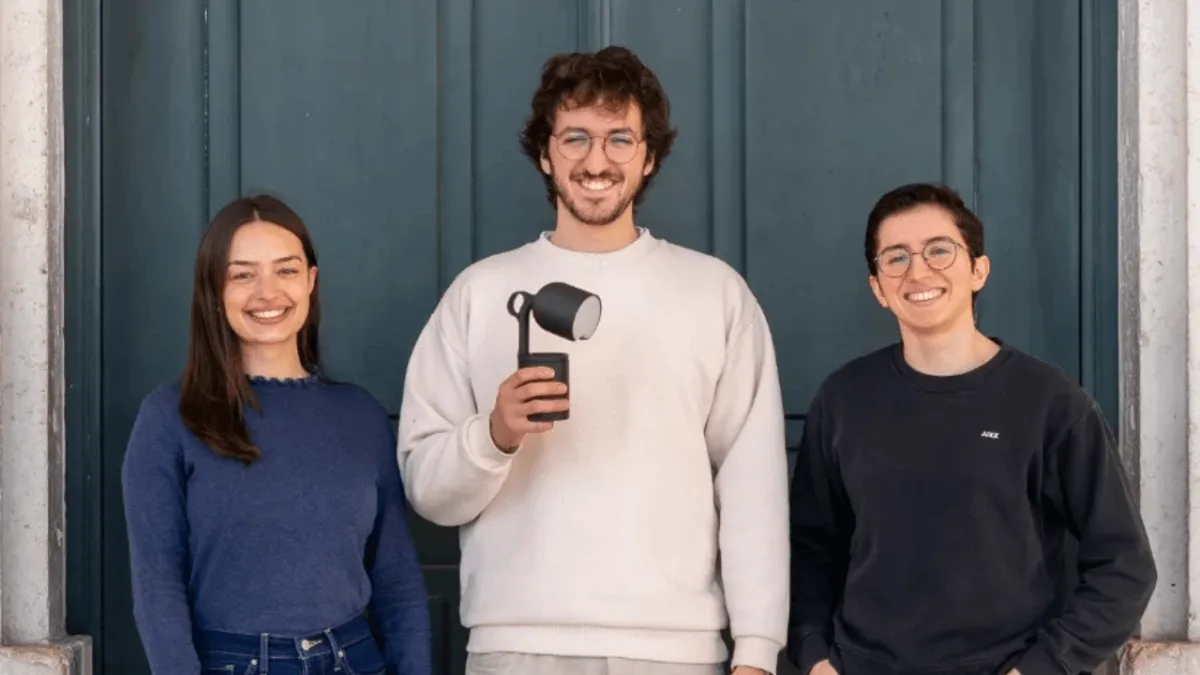
Lampsy's design philosophy addresses these barriers directly. The device requires no body-worn components, integrates seamlessly into nightly routines, and resembles ordinary bedroom furniture rather than medical equipment. A concealed infrared camera tracks bodily movement throughout sleep, even in complete darkness. The device's internal computer vision and artificial intelligence system identifies patterns characteristic of tonic-clonic seizures, triggering automatic notifications to pre-selected emergency contacts and sending alerts through a companion application.
Globally, approximately 50 million individuals live with epilepsy according to World Health Organisation estimates. This population faces mortality risk three times higher than the general population, and roughly one in three continues experiencing seizures despite consistent medication use. Within Europe, 300,000 newly diagnosed cases emerge annually. Sudden Unexpected Death in Epilepsy (SUDEP) accounts for 33,000 annual deaths across the continent, with research indicating that 40 per cent of these deaths could have been prevented.
This project began with a request from a medical team at Hospital de Santa Maria: to find out what happens to these patients at night without forcing them to sleep hooked up to a machine. Bringing that answer into families' homes is the step that gives meaning to all the work we've done in the lab and in hospitals.
Vicente Mayer Garção, co-founder and CEO of Lampsy Health
From hospital testing to home deployment
Until the present moment, the lamp has remained accessible only to medical professionals through a partnership arrangement covering all public hospitals in the Lisbon Metropolitan Area that specialise in epilepsy care. The technology underwent validation using more than 9,200 hours of clinical data and obtained European Union medical device certification. Market entry is scheduled for the first quarter of 2027, with over 7,500 individuals across 20 countries already on the company's waiting list.
According to Mayer Garção, the United Kingdom represents half of the waiting list population. He notes:
Demand came before we did. This round gives us the means to respond, starting with the countries where families are waiting.
Vicente Mayer Garção
The company's immediate priorities centre on reaching European and UK families currently awaiting the product, with longer-term expansion into the United States market. The broader vision extends beyond epilepsy: Lampsy Health aspires to establish itself as a leader in remote chronic disease monitoring through technology that remains unobtrusive, discreet and contact-free.
The same underlying technology could address other conditions affecting large populations. Sleep apnoea, which impacts nearly one billion adults worldwide, represents one potential application area.
Recognition and momentum
Over the preceding twelve months, Lampsy Health has accumulated multiple accolades domestically and internationally. The company won Startup World Cup Portugal 2026, securing the opportunity to represent Portugal at the global final in San Francisco, and received the KPMG Global Tech Innovator Portugal 2026 award, which advanced it to the international competition at Web Summit in Lisbon.
Additional honours include the Startup Showcase award at WIRED Health 2026 in London and selection as a finalist in the Epilepsy Foundation's 2025 Startup Accelerator programme in the United States. WIRED magazine included Lampsy Health among its 100 most promising European startups for 2026. Fast Company's Innovation by Design Awards 2026 granted it an honourable mention in the Health and Wellness Design category, and Unicorn Factory Lisbon designated it as Most Promising Startup 2025.
The European Innovation Council selected Lampsy Health for the EIC Pre-Accelerator, choosing it as one of 70 companies from over 1,000 applicants in the programme's inaugural call focused on deep-tech ventures. Co-founders Vicente Garção and Leonor Pereira both appear on the Forbes 30 Under 30 Portugal 2026 list.
Source: Tech.eu