Sequent, a London-based company developing mathematical verification methods for software safety, has secured $2.2M in pre-seed funding. Frachtis and Metaplanet jointly led the round, with Metaplanet being the investment firm of Skype co-founder Jaan Tallinn, who previously led Anthropic's 2021 Series A.
The firm's core offering, Alan, addresses a fundamental limitation of conventional testing approaches. While testing validates only the scenarios developers explicitly check, formal mathematical proofs demonstrate that code adheres to its safety specifications across all possible cases. Historically, manually constructing these proofs required specialized expertise and could consume months or years of work, restricting the technique to critical domains such as aviation systems.
Recent advances in artificial intelligence have transformed this landscape. The repetitive, computational nature of proof generation aligns well with AI capabilities. Through Alan, engineers can express their safety requirements in everyday language—such as "no user can withdraw more than their account balance"—and the system automatically discovers the necessary proofs. A separate verification engine called HOL4, which operates without AI assistance, independently validates each proof step or rejects it entirely.
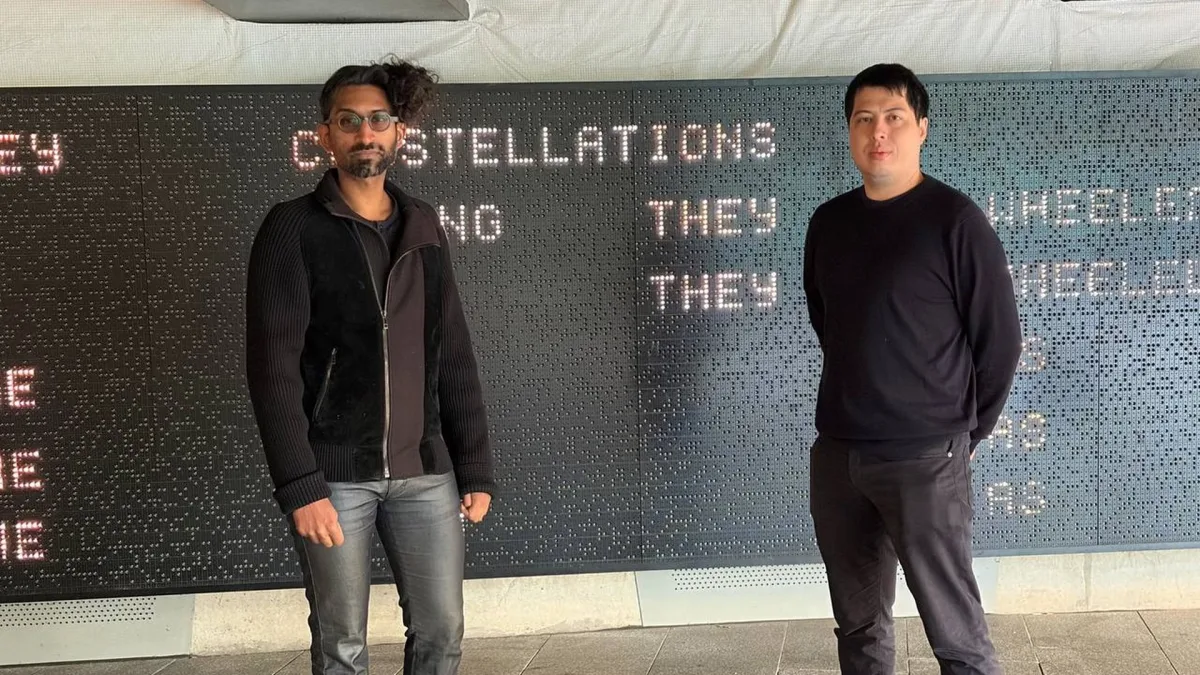
The company's origin traces back to a significant security incident. Charles Cooper, who leads Vyper, one of Ethereum's two primary programming languages, accidentally introduced a compiler vulnerability in 2021. Attackers exploited this flaw in July 2023 to extract over $60 million from legacy pools at Curve and related platforms.
Following the breach, Ramana Kumar, a former safety researcher at Google DeepMind, approached Cooper with an offer to formally verify the compiler's correctness. Kumar had previously co-developed CakeML, a compiler with complete mathematical proof of its correctness down to machine-level instructions. This collaboration evolved into Sequent, where Kumar now serves as Chief Technology Officer.
Curve has become Sequent's inaugural paying customer. For a particular category of its liquidity pools, Alan has mathematically verified that users cannot extract more than a predetermined amount from depositors, regardless of their actions or transaction sequence. According to Curve CEO Michael Egorov, "we can prove depositors' money stays protected by the same limit" whenever the pool's code undergoes modifications.
Cooper contends that the implications extend far beyond cryptocurrency. Financial institutions and government agencies have traditionally relied on code secrecy as a protective measure. However, AI-driven attack capabilities are undermining this approach, while affordable formal verification shifts the balance toward defenders.
A critical safeguard ensures AI remains subordinate in the verification process. During his time at DeepMind, Kumar investigated how AI systems can identify solutions that technically satisfy a rule's wording while violating its underlying intent. Consequently, engineers independently approve every safety rule, and all proofs must satisfy HOL4, whose foundational architecture remains sufficiently compact for expert review at the code level.
Alan currently supports Vyper smart contracts, with Solidity and Solana implementations under development. Support for Rust, C, TypeScript, and Python is planned for future releases. Early access pricing begins at $99 monthly. The founding team's immediate objective is to formally verify the Vyper compiler itself—the very component where the original vulnerability originated.
Source: The Next Web