The acquisition of Odessia by OpenAI marks another move by the AI company into specialized applications. Francis Davidson, who co-founded the travel startup, announced the deal on X on Tuesday, revealing that he would be moving to OpenAI to concentrate on travel innovation.
https://x.com/FDavidsonT/status/2120214953349263473?ref_src=twsrc%5Etfw
I'm thrilled to announce that Odessia was acquired by OpenAI, and that I will be joining the team to focus on the future of travel
Francis Davidson
An OpenAI representative validated the transaction to TechCrunch, characterizing Davidson as "a proven founder who has built multiple businesses to help people travel". The timing of the acquisition aligned with OpenAI's introduction of Businesses in ChatGPT, a feature enabling companies to conduct sales directly within the chatbot interface.
Despite its brief existence, Odessia had built considerable momentum. During the summer months, tens of thousands of users relied on the platform to organize travel plans representing more than $60m in annualized spending. The startup's website now displays a message indicating that "the service is no longer available".
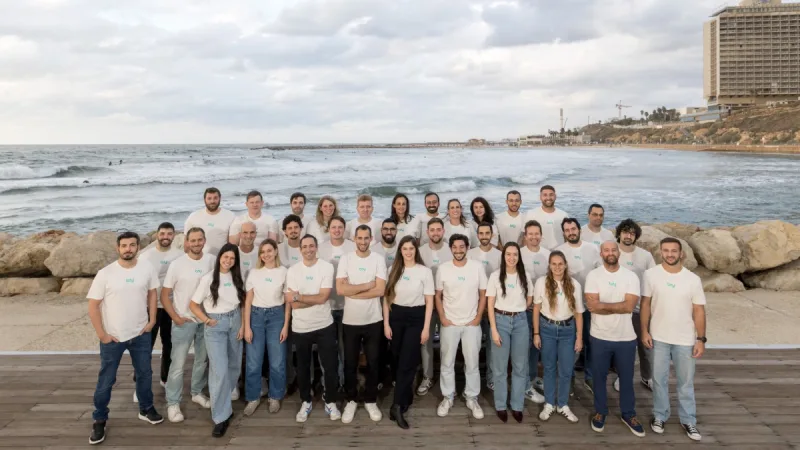
Odessia had been operating for less than a year when the acquisition occurred. The company secured $6M in funding during June through a round spearheaded by Sequoia, maintained a workforce of eight employees based in San Francisco, and made its public debut on October 14. The service functioned as a free concierge that enabled users to organize trips via text-based conversations.
The platform's capabilities extended to arranging and booking flights, accommodations, and complete travel itineraries within a single chat exchange. Odessia operated using OpenAI's GPT-5.5 and Codex models and held IATA accreditation, granting it the ability to issue airline tickets and gain access to exclusive hotel pricing and perks.
For OpenAI, this acquisition represents the addition of an operational travel-booking system and the knowledge base supporting it, though not necessarily an immediate revenue stream.
Market participants expressed concern about the possibility that OpenAI might eventually emerge as a direct competitor to established online travel agencies. Stock markets reflected this anxiety: Expedia's shares declined as much as 5% on Tuesday, Booking Holdings fell up to 3%, and Airbnb dropped around 3.5%, per Investing.com data.
A significant wrinkle complicates this competitive dynamic: several of these same companies already maintain relationships with OpenAI. Booking.com and Expedia were among the earliest travel platforms to integrate their applications into ChatGPT, and KAYAK maintains a partnership with OpenAI as well. Travel brands including Delta Vacations have additionally purchased ChatGPT advertising through an Amazon Ads pilot program. Until this point, ChatGPT has primarily steered users toward external booking platforms rather than processing travel transactions directly.
For Davidson, the Odessia acquisition represents a fresh chapter following turbulent circumstances at his earlier venture. He established Sonder, a hybrid apartment-hotel operation, in 2014 while pursuing his studies. The company achieved public listing in 2022 but subsequently lost its Marriott partnership and initiated bankruptcy proceedings in November 2025. During its strongest period, Sonder generated $600m in yearly revenue, according to Davidson.
Davidson's announcement also shed light on Odessia's operational approach. He referenced a compact group managing numerous AI agents, noted that his personal deployment of agents had grown "25x through 2026", and characterized the company's core philosophy as "the best process is no process".
OpenAI has now acquired a startup that transformed from launch to an accredited travel-booking operation in under twelve months, along with a founder possessing substantial experience in the travel sector. The platform itself has already ceased operations, though OpenAI's intentions for the underlying technology and whether it will eventually facilitate bookings directly within ChatGPT remain uncertain.
Source: The Next Web