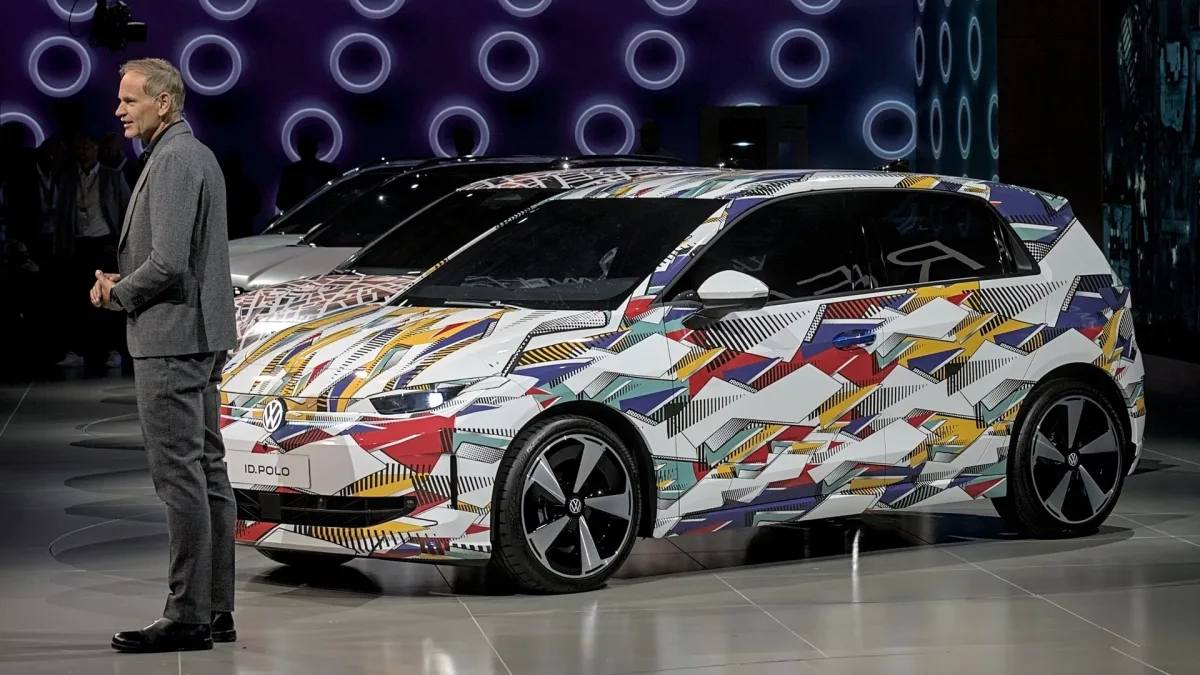
Volkswagen is preparing to take automotive technology developed at its Hefei research centre beyond China's borders for the first time, with vehicles built on these platforms expected to reach South America by the end of the decade. According to Reuters reporting from Hefei on Wednesday, this marks a significant shift from the company's historical practice of restricting China-developed innovations to the Chinese market alone.
The strategy revolves around two key technologies created at the Hefei facility in partnership with Chinese firms: the Compact Main Platform and the China Electronic Architecture. These will serve as the foundation for a new generation of vehicles aimed at what Volkswagen terms the Global South—developing markets where affordability and local relevance are paramount.
Beyond South America, Volkswagen intends to expand shipments of China-manufactured Volkswagen and Jetta models to Africa and potentially Southeast Asia in the coming years. The company has explicitly stated that Europe and North America will not receive these China-developed models for the foreseeable future.
Oliver Blume, Volkswagen's chief executive, framed the initiative as part of the company's broader vision, stating: "We call it in China, and beyond." He emphasized that China functions as a critical innovation hub within the Volkswagen group.
Technology and Innovation
The China Electronic Architecture was developed collaboratively with Xpeng, a prominent Chinese electric vehicle manufacturer. This architecture is engineered for software-defined vehicles, where most capabilities and updates are managed through software rather than hardware modifications. The system maintains compatibility across multiple platforms and powertrain configurations.
Volkswagen also unveiled VEGA, an integrated technology package that pairs 850-volt rapid charging infrastructure with support for Level 3 autonomous driving capabilities—allowing vehicles to operate independently under specific driving conditions. The company expects to introduce VEGA in 2027.
Cost and Efficiency Gains
Manufacturing vehicles using this approach in China can reduce development cycles by as much as 30%, according to Volkswagen. The company is also repositioning its China operations from a historically profitable division into a cost-effective centre for product design and export manufacturing. This transformation represents a core element of the company's most extensive restructuring in its 89-year existence.
Challenges in the Chinese Market
The strategic pivot comes as Volkswagen confronts mounting competitive pressure within China from domestic manufacturers including BYD and Geely. Collaborations with Xpeng and Horizon Robotics have yet to yield commercially successful products, Reuters reported.
Market conditions in China continue to deteriorate. Ralf Brandstatter, who oversees Volkswagen's China operations, projects that the country's passenger vehicle market will contract by 20% in the current year, representing a decline of approximately 4.5 million vehicles.
Source: The Next Web