Lute, a physical AI company based in Warsaw and established in January, has closed a combined pre-seed and seed funding round totaling $20M, announced this week. The seed stage was co-led by OTB Ventures and FORWARD.one, while Credo Ventures and Seedcamp spearheaded the pre-seed. Additional backers include Inovo VC, Borusan Ventures, ff Venture Capital and angel investor Naval Ravikant.
The startup's inaugural touch-trained model performed at or above the level of π0.5, an open-source system from Physical Intelligence, across retail operations in Lute's internal evaluations. The company plans to deploy capital toward acquiring touch data, scaling model training and expanding its customer base. Recruitment efforts are underway in both Warsaw and San Mateo, California.
The case for tactile feedback
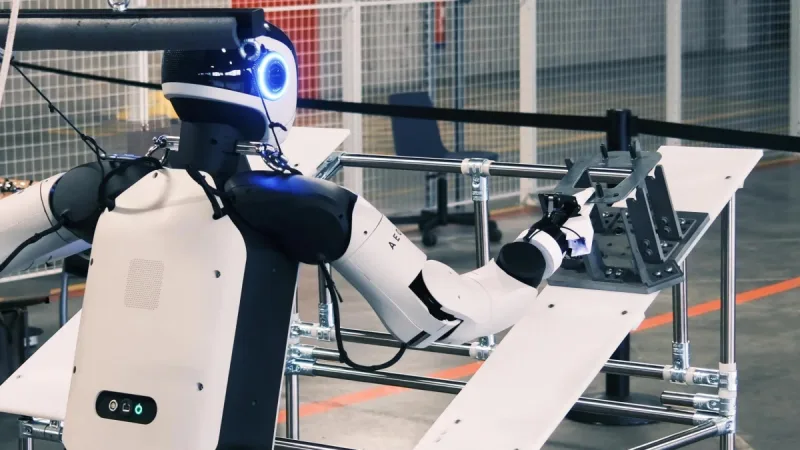
Contemporary robotic systems and physical AI implementations typically depend exclusively on visual input. While cameras enable robots to identify object locations, they cannot convey grip pressure, whether something is slipping away, or material delicacy. Lute's leadership team developed compact, flexible tactile sensors in collaboration with partners and integrated them into a mobile collection apparatus, enabling touch data gathering across diverse environments. Similarly, Zurich-based Enact is pursuing comparable technology and secured $30M in October to equip robots with tactile perception.
"We believe touch is the missing signal that lets robots handle real work reliably," said Paweł Budzianowski, Lute's chief executive, in a statement released by FORWARD.one.
Lute-0 versus π0.5
Lute unveiled Lute-0, its first model, which learns visual scene transformations and translates them into robotic actions. This represents the initial entry in a planned series of models designed to integrate touch data alongside visual information.
During Lute's internal retail assessments, Lute-0 equaled or surpassed π0.5's performance. When handling vegetables, Lute-0 achieved success in 76% of attempts compared to 22% for π0.5. For soft snacks, results reached 98% versus 70%. Lute additionally claims its system operates at double the speed. These metrics derive from Lute's proprietary testing, and no third-party validation has been made available.
According to Lute, Lute-0 underwent pre-training using substantially less data than π0.5 and required significantly shorter training periods. The two lead investors cite varying figures: OTB Ventures indicates approximately one-twentieth of the pre-training data and one-quarter of the training steps, while FORWARD.one estimates roughly one-tenth of the pre-training data.
Deployment in production environments
Within its first ten months of operation, Lute's systems are already functioning at what the company describes as Europe's largest automotive parts distributor. OTB Ventures values this partner's annual revenue at $6bn. Beyond automotive, Lute operates on-site with major retail chains and has deployed models in hospital corridors, per OTB's account. The startup also collaborates with systems integrators—companies specializing in robot installation for end clients—with initial focus on healthcare and manufacturing sectors.
At deployment sites, robots operate autonomously when feasible, with human operators providing remote assistance during challenging situations. According to FORWARD.one, systems function without supervision approximately 90% of the time. Operational issues and their resolutions feed back into model training, allowing each new installation to enhance subsequent deployments.
"In physical AI, the slow and the perfect will both lose," noted Boy de Jonge, investment manager at FORWARD.one.
The team
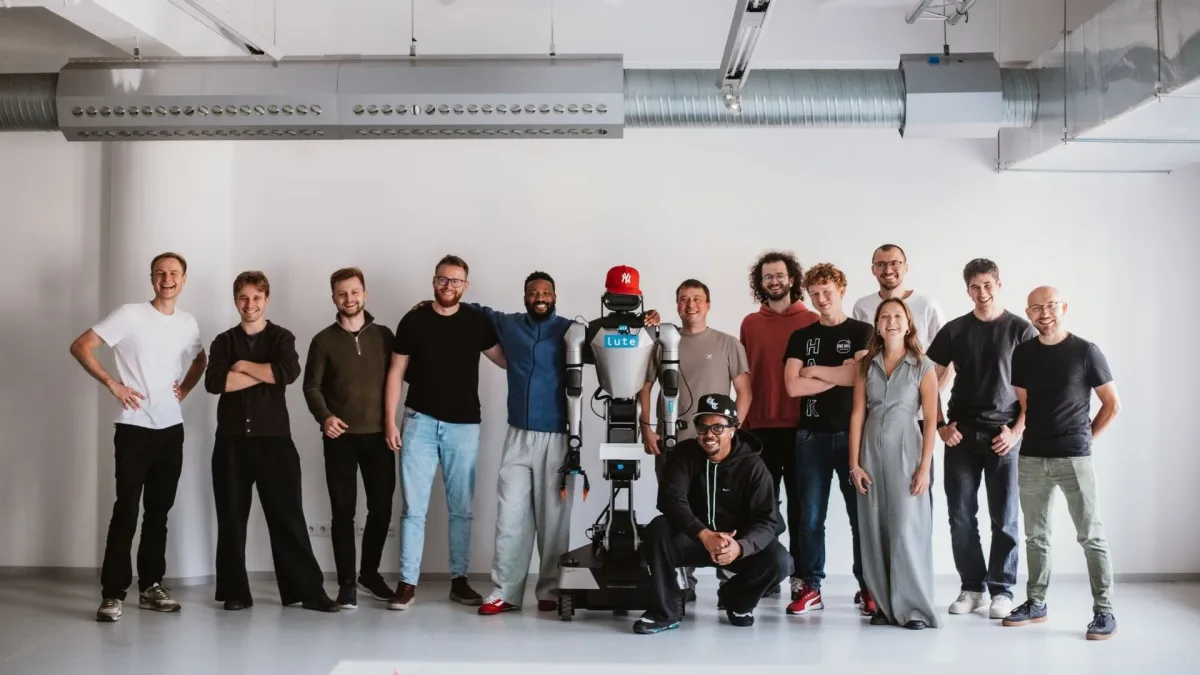
Budzianowski holds a machine learning doctorate from Cambridge and previously directed the machine learning division at PolyAI. He also founded K-Scale Labs, an organization that developed affordable open-source humanoid robots. Krzysztof Walas serves as chief technology officer and was formerly an associate professor at Poznań University of Technology, where he advised Nomagic, a Polish warehouse robotics firm. The organization currently employs 16 people distributed between Warsaw and the Bay Area.
Source: The Next Web