Picture a robot moving freely through a warehouse while drawing power from the air around it, or stepping into a room where your phone begins charging automatically without touching a pad. At Slush in Helsinki, Willo Technologies showed exactly this vision in action, unveiling wireless power technology that operates in three dimensions rather than the flat surfaces conventional chargers require.
The Finnish deeptech company, spun out from Aalto University, is reimagining how electricity travels across short distances by transmitting it through air much as Wi-Fi broadcasts data. Unlike today's wireless chargers, which demand devices rest on a pad or cradle aligned to millimetre precision, Willo's approach creates an enclosed space where devices can receive power from any angle and position, even while moving or blocked by obstacles.
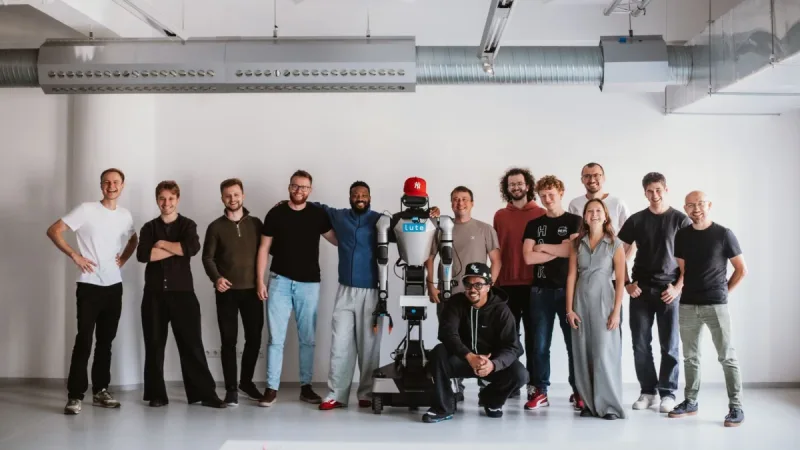
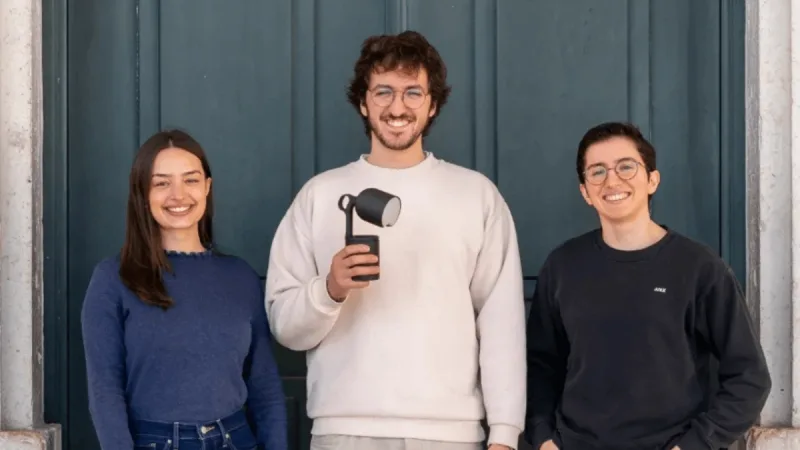
Harri Santamala, co-founder and CEO, and Nam Ha-Van, co-founder and CTO, lead a team drawing on more than a decade of research and talent from institutions like Oura, Nokia and Microsoft. The company raised €2.9 million in funding earlier this year, backing its ambition to transform how machines and devices stay powered.
Engineering stability in a moving world
The core challenge lies in maintaining steady power delivery when conditions constantly shift. As devices enter, leave or relocate within the power zone, their electrical demands change, and each one alters how the system behaves overall. Keeping power consistent under these dynamic circumstances is essential for moving beyond controlled lab settings into real industrial use.
Wireless power research spans decades, yet the physical and engineering hurdles of conventional systems have remained stubborn. Santamala reflected on the journey: We've continuously tried to push the technology beyond those limitations, and we've successfully developed a technology that provides greater freedom. We've also managed to build an excellent team. People feed off each other's ideas and then build on them. Seeing this technology working in real-world environments is particularly rewarding for our technical team.
While other teams pursue next-generation wireless power, Ha-Van notes that many research prototypes still impose constraints on device positioning and movement. If you look closely, there are often restrictions on how the receivers are positioned or held. They don't necessarily give you the freedom you would want. There can also be restrictions when introducing objects into the charging environment. What we're aiming to provide is full freedom while charging, regardless of the form factor.
Two paths to wireless power
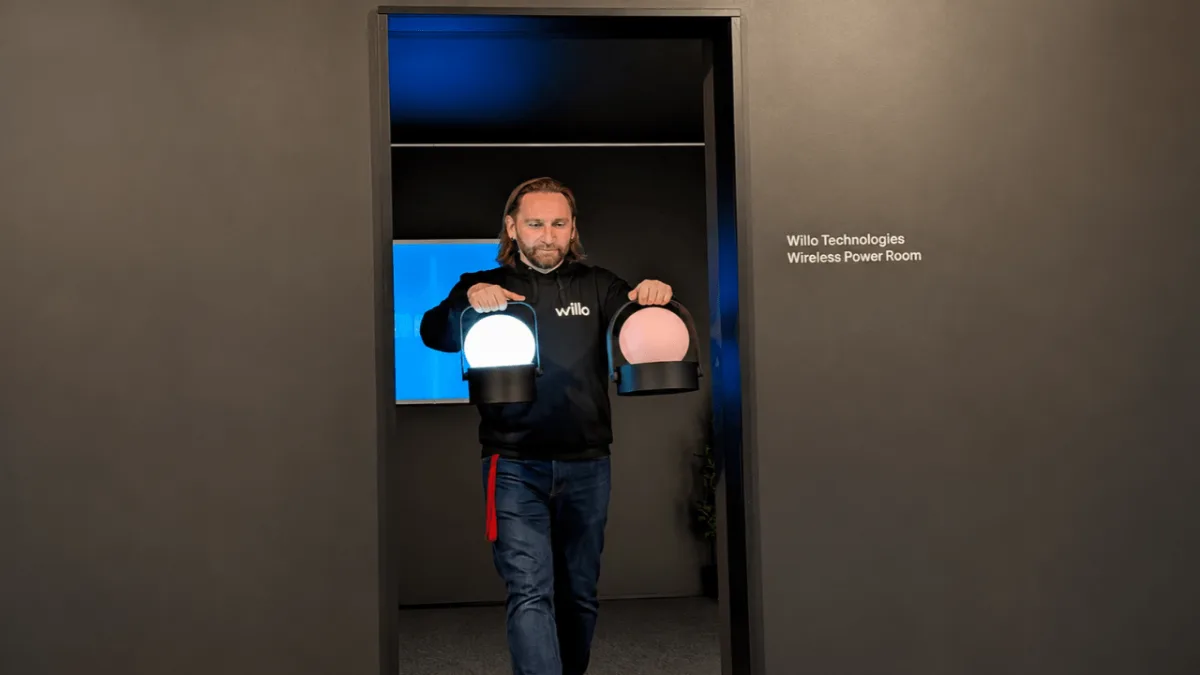
At Slush, Willo unveiled two implementations of its core technology. The PowerBubble generates a strong, stable field capable of powering drones and robotic trucks without cables or pads, while a wireless room creates a uniform zone where lamps operate freely. Though built on similar underlying principles, each adapts to different form factors and purposes, both aiming to grant greater movement freedom during charging.
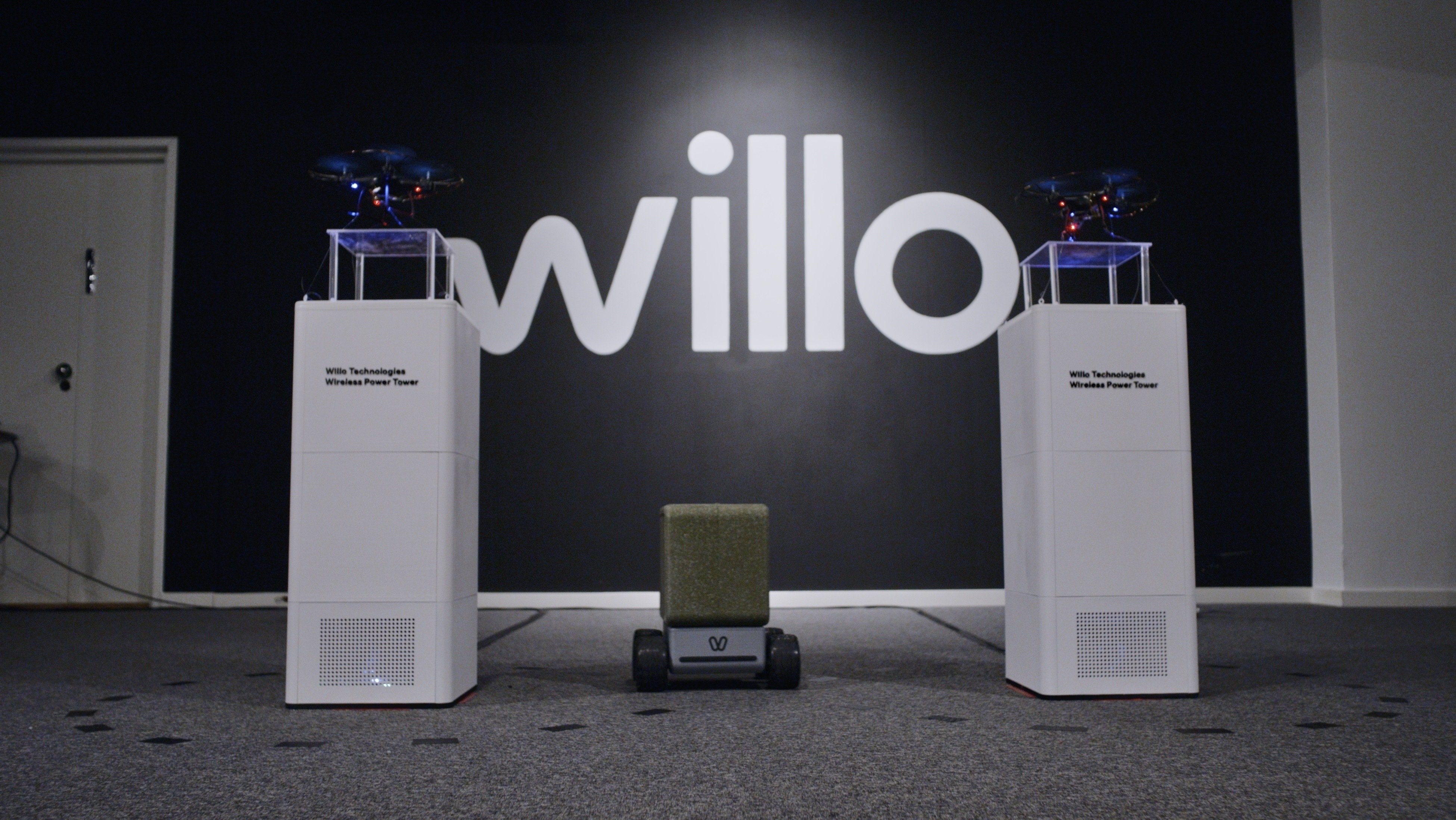
The company operates at 6.78 MHz within the internationally designated industrial, scientific and medical (ISM) band, a choice that streamlines the path to product certification. Its hub-based system currently sits at Technology Readiness Level 5, meaning it has been validated in a relevant environment. Willo projects its operating range will expand over time, though even confined power zones hold substantial industrial value.
Ha-Van explained the robotics angle: If you think about many robotic operations, robots return to the same location repeatedly. As long as you can provide a sufficient power field within that area, it could be enough to support those operations. Santamala added, We've been targeting robotics OEMs and hardware manufacturers, and that's where we're progressing now. We want to be their technology partner in enabling wireless power.
Building the team before scaling
Willo operates with a seven-person team of industry veterans and academic researchers. Santamala emphasised the company's approach to growth: You don't necessarily want to grow the team too much at an early stage, until you reach a point where things are ready to scale. What's more important to us is having absolutely the best team in the world for doing this. The startup's technical standing has proven crucial in recruiting experienced talent.
Why robots come before phones
Willo is advancing toward pilot deployments, with commercial launches likely 18 to 24 months away, contingent on customer specifications aligning with current capabilities. The company's technology made its public debut at CES 2026, where it earned CNET's Best of CES award.
Though consumer electronics represents an enormous potential market, Willo sees robotics and automation as the nearer opportunity. Breaking into consumer devices demands backing from major manufacturers—a particularly steep climb for entirely novel technologies. Ha-Van explained the hurdle: Consumer products have a chicken-and-egg problem. If we wanted to introduce this technology, we would have to bring in the big players manufacturing the devices. It's something you have to build and get to a certain stage before they start paying attention and really understanding the opportunities, especially when you have a blue-ocean technology.
Part of the challenge involves educating the market about wireless power's possibilities beyond cables and static pads. Demonstrating what the technology enables could prompt manufacturers to rethink device design, power systems and operation entirely. Previously, you had cables and static wireless power, but you can actually do things differently. Once your imagination starts running, it gets pretty wild in terms of what you could do with wireless power, Ha-Van said.
For Santamala, the deepest opportunity lies in reimagining electricity infrastructure itself. We built this technology to make an impact and bring about change, and it's easy to imagine the changes we could enable through this technology.
Research partnership with Japan
In September 2026, Willo signed a joint research agreement with Japan's Chiba University to tackle one of the central engineering challenges: maintaining stable power as operating conditions shift. The 12-month partnership will explore how to sustain stable operation as devices move within the power zone and their power demands fluctuate, including scenarios with multiple devices and people present.
The collaboration taps expertise from Professor Hiroo Sekiya and his research group, specialists in high-frequency power conversion and load-independent wireless power transfer. Willo already maintains close university ties through engineering team member Dr Yutaro Komiyama, who earned his PhD under Sekiya's guidance. The partnership carries particular weight given Japan's leadership in industrial robotics, precision equipment and sensors—sectors where cables and connectors create significant design and operational friction.
Willo's immediate priorities centre on scaling its technology, advancing technical maturity and reaching market. The longer-term vision, however, extends far beyond convenience. By eliminating cables, physical connectors and alignment requirements, Willo could fundamentally reshape how engineers design machines, industrial spaces and the electrical systems powering them.
Source: Tech.eu