Constructing a functioning fusion reactor demands far more than theoretical breakthroughs in physics. The path to commercial power generation requires assembling vast quantities of specialized materials and infrastructure for plasma control and fuel management—often years before the actual facility becomes operational.
Proxima Fusion, headquartered in Munich, is addressing this challenge through a pair of new partnerships with Japanese firms. The two memorandums of understanding were finalized in Tokyo on Wednesday, coinciding with German Chancellor Friedrich Merz's official visit to Japan.
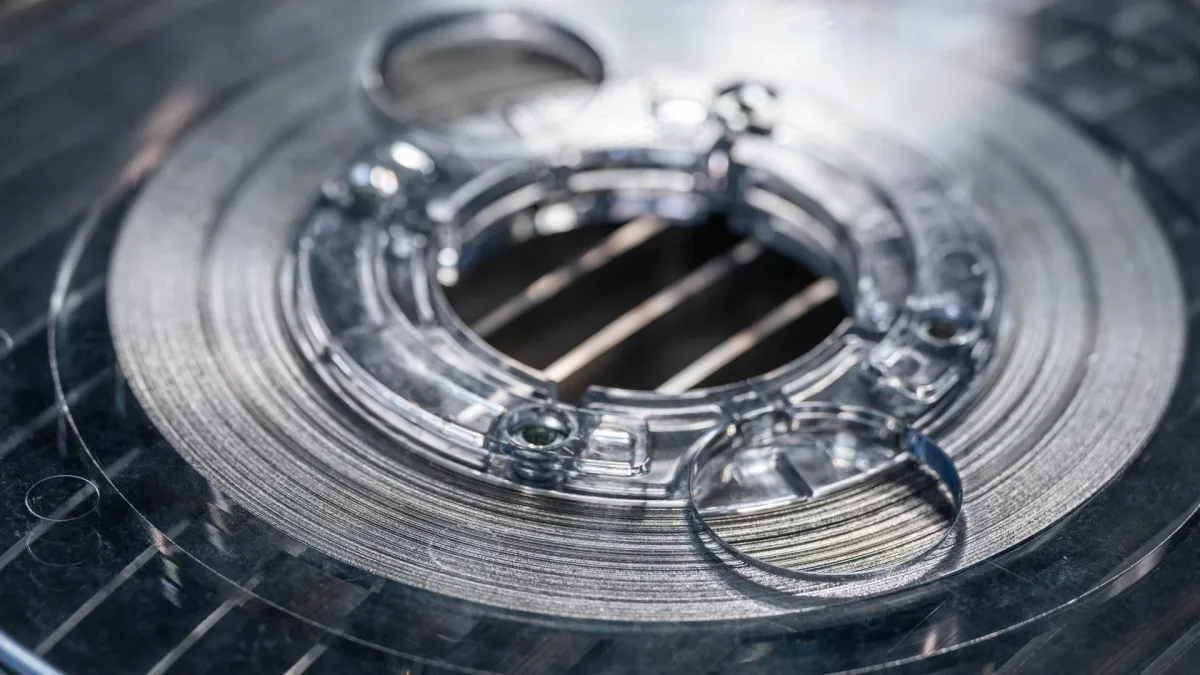
The first partnership pairs Proxima with Fujikura, a manufacturer of cables and optical fibres, to collaborate on high-temperature superconducting (HTS) tape production. Both organizations will evaluate the viability of establishing a manufacturing facility in Lower Saxony to produce this material locally.
The second arrangement involves Kyoto Fusioneering and centers on technology for heating and fueling plasma within fusion reactors.
These agreements remain preliminary—neither constitutes a binding purchase order or construction commitment. Nevertheless, they underscore the critical importance for emerging fusion companies to lock in access to essential materials and equipment as they transition from experimental prototypes toward commercial-scale installations.
Scaling up stellarator technology
Proxima specializes in stellarators, reactors that employ intricate twisted magnetic configurations to contain plasma at extreme temperatures. The superconducting magnets at the heart of these devices depend on HTS tape, a material capable of conducting electricity with zero resistance when sufficiently cooled and performing reliably within exceptionally strong magnetic environments.
For Alpha, Proxima's demonstration machine scheduled for the early 2030s, the company anticipates requiring approximately 20,000 kilometres of tape. Each subsequent commercial Stellaris power plant would demand roughly 40,000 kilometres, according to company projections.
Fujikura already serves the broader fusion sector. Last month, US-based Commonwealth Fusion Systems placed an order exceeding 10,000 kilometres of tape with the Japanese supplier, according to Khaleej Times.
Plasma heating and fuel management
Kyoto Fusioneering will collaborate with Proxima on gyrotrons—devices that employ intense microwave radiation to elevate plasma temperatures—alongside the fuel cycle infrastructure that regulates hydrogen consumption in fusion reactions.
The Japanese partner will additionally contribute its expertise to Germany's Fusion Hubs programme, a national initiative established by the research ministry this year with €125 million in initial funding.
The global race to fusion will be won in factories and supply chains
Francesco Sciortino, Proxima's CEO and co-founder
European ambitions and industrial strategy
Germany has positioned itself as a contender to host humanity's first operational fusion power plant, with Proxima among the leading candidates driving this objective.
Proxima emerged from the Max Planck Institute for Plasma Physics and secured €411 million in funding during July at a €2.4 billion valuation, per the institute. The organization currently maintains a workforce of roughly 200 employees.
These partnerships also reflect a wider European initiative to develop and manufacture strategic technologies domestically rather than depending on overseas sources. Infineon is committing €1.1 billion toward semiconductor fabrication in Austria, while European artificial intelligence data centres increasingly face electricity availability as a limiting factor.
For Proxima, converting these preliminary understandings into a dependable, functioning supply chain represents the immediate challenge ahead. Although its demonstration reactor remains several years from completion, establishing the necessary industrial infrastructure cannot wait.
Source: The Next Web