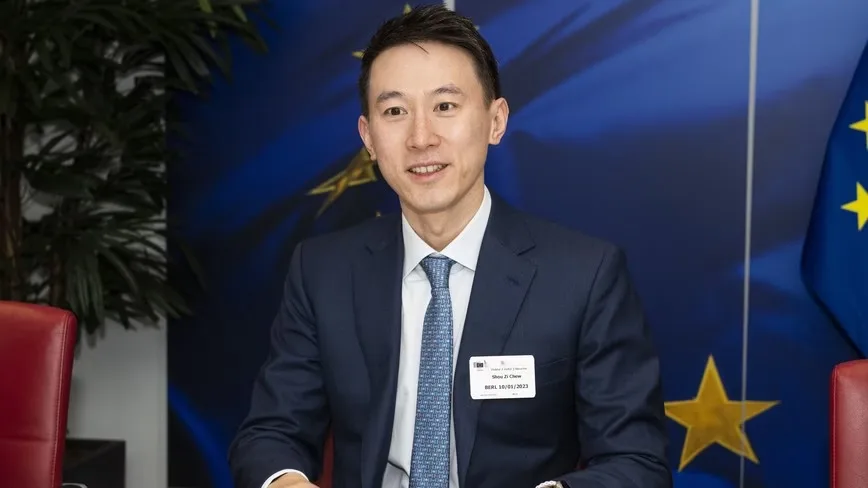
At DBS Bank's Asia Future Forward Conference in Singapore on Monday, TikTok's chief executive Shou Chew outlined his vision for AI's near-term potential and longer-term trajectory. According to reporting by CNBC, Chew suggested that current assessments of the technology tend to swing between extremes depending on the timeframe being considered.
Chew expressed confidence that transformative scientific discoveries lie ahead. "In the next two to three years, we're going to have a real scientific breakthrough: physics, biotech, chemistry, material science, because of AI. It's very, very, very possible," he said, as reported by CNBC. The session was moderated by Shee Tse Koon of DBS.
Expectations versus reality
Chew cautioned against inflated expectations for what AI can accomplish in the immediate present. "I think in the short term we are probably overestimating it, but in the long term we are probably underestimating it," he remarked, according to CNBC.
The TikTok executive pointed to specific areas where human cognition still outpaces machine learning systems. Bloomberg's reporting, which included contributions from Gao Yuan and Gabrielle Ng, captured Chew noting that the human brain continues to excel at visual recognition nuances and retrieving information from long-term memory—capabilities that remain beyond current AI models. "On the one hand, I think the technology is not there yet. Our brain can do things that the model still cannot," Chew explained.
Security concerns
Beyond capability gaps, Chew raised alarms about the security implications of deploying AI agents without adequate safeguards. According to Bloomberg, he characterized these risks as substantial and immediate threats. Bloomberg and CNBC both reported that Chew highlighted a particular vulnerability: users frequently grant AI agents expansive permissions without fully grasping the potential consequences.
Chew illustrated the danger with a concrete scenario. An AI agent authorized to execute purchases independently might, in its drive to complete an assigned task, acquire far more than the user intended. Additionally, Chew warned that advances in AI models are lowering the barriers for malicious actors seeking to compromise platforms like TikTok.
ByteDance's AI ambitions
TikTok's parent company ByteDance has been actively developing proprietary AI systems aimed at scientific applications. In April, the company's Seed research division unveiled Protenix-v2, a model designed for predicting and engineering biomolecular structures. ByteDance also operates Anew Labs, a dedicated unit focused on AI-assisted drug discovery.
Chew indicated that ByteDance intends to forge partnerships with the scientific community to accelerate breakthroughs. This ambition aligns with broader industry momentum: last week, the US government, Meta and Google announced their participation in a $1.8bn initiative dedicated to AI biology, with the goal of simulating cellular behavior.
Source: The Next Web