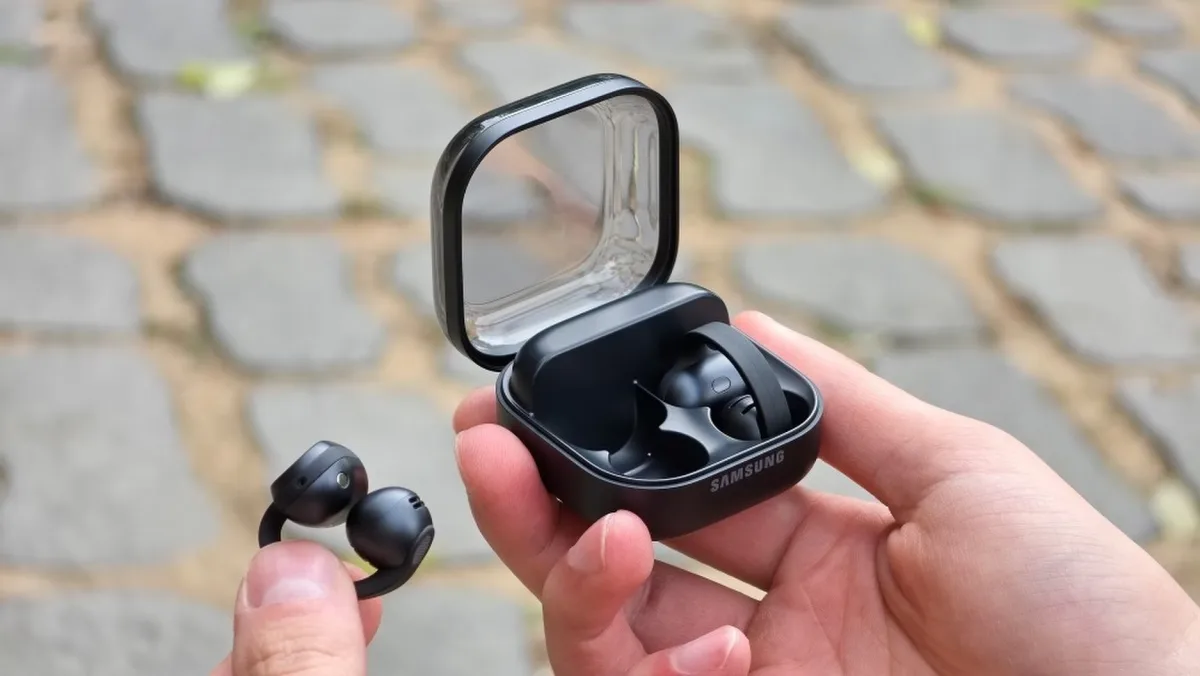
The South Korean tech giant is launching the Galaxy Buds On, its inaugural entry into the clip-style earbud category. Priced at $229, these earbuds will become available across the US starting 6 November, arriving in black only, following an earlier release in South Korea this month.
Unlike traditional in-ear designs, the Galaxy Buds On feature a C-shaped form that wraps around the earlobe while keeping the ear canal unobstructed. This open-ear approach allows users to remain aware of their surroundings while enjoying audio content.
Samsung's new offering enters a competitive landscape already populated by similar products from established audio brands. Sony's LinkBuds Clip commands a comparable price point, while Bose positions its Ultra Open Earbuds at $299, according to SoundGuys. Several Chinese manufacturers have also entered this segment.
The company developed the earbuds' shape using artificial intelligence and data gathered from over 119 million ear measurements to ensure compatibility across diverse ear geometries. To address a frequent complaint with open-ear models—sound leakage to nearby listeners—Samsung incorporated reversed sound waves from the speaker's rear to contain audio.
Battery performance stands as a key differentiator. The Galaxy Buds On deliver 9.5 hours of continuous playback, marking the longest runtime in Samsung's Galaxy Buds lineup, a benefit partly attributable to the absence of active noise cancellation. The accompanying charging case extends total listening time to 38 hours.
The earbuds carry an IP54 rating, making them resistant to splashes while remaining unsuitable for submersion. An ambient sound adjustment feature automatically modulates volume levels in response to surrounding noise conditions.
Integration with Google's Gemini assistant mirrors functionality found in earlier Galaxy Buds models. Head gestures enable users to accept or decline incoming calls without touching the device.
The Galaxy Buds On represent part of a broader industry shift toward audio and visual interfaces for artificial intelligence interaction. Samsung previously collaborated with Google on Gemini audio glasses and unveiled its own AI-enabled eyewear prototype in July. Qualcomm introduced its first earbud processor specifically designed for AI assistants in September.
Source: The Next Web